
What is it?
Root canal treatment is used to save teeth which would otherwise need to be removed.
It is needed when the blood or nerve supply of the tooth (known as the pulp) is infected through decay or injury.
Is it painful?
Simply, the answer is no!
Root canal treatments are usually done on teeth where the nerve and blood supply (the pulp) has died off, so it is usually completely painless. However, we would always use a good level of local anaesthetic.
Occasionally we need to treat teeth where the tooth pulp is inflamed and still dying off. In this situation, we would use a much stronger local anaesthetic to ensure the procedure is comfortable and totally pain-free.
How long does it take?
If a root canal is done to a high standard, then it will take a while. We would normally book one or two 1 hour appointments. To help time pass, so it doesn’t feel as long, we will place a little rubber sheet (rubber dam) over the tooth. This will help support your jaw and give you the sensation of being separated from the treatment.
The most common comment we get after treatment is –
‘ That rubber sheet is amazing- it felt like the treatment was happening to someone else. I think I may even have fallen asleep at some point!’
Why us?
Our primary concern is your comfort
We invest in all the latest technology to achieve the highest possible success rates
We always use the rubber dam as mentioned above as this makes the procedure more comfortable and also increases the long term success of the treatment.
Our dentists are all highly trained but we also have the services of an accredited dentist with specialist interest in endodontics who is on hand to support us with very complex cases.
Our pricing where applicable* is always transparent so there are no hidden fees or costs.
* (non-specialist level root canal treatment is free for Denplan care patients)
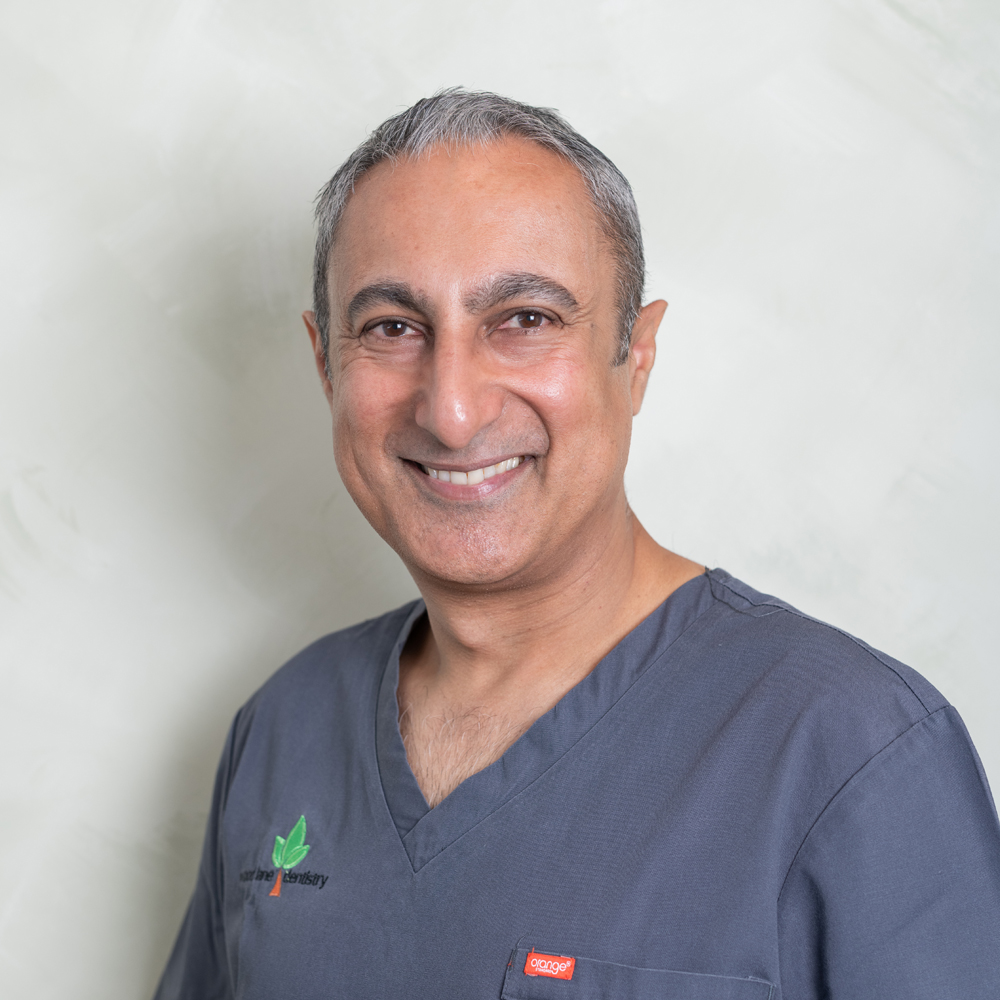
Meet the dentist – Vikram Chugani
BDS(Wales)- Batchelor of dental surgery MFDS RCSEd – Membership exam for the Royal College of Surgeons MSc(UCL) – Masters in Conservative Dentistry this fixed prosthodontics (including Implants) and Endodontics
GDC Number: 75978
Vik has extensive experience in endodontics, with a particular interest in complex root canal treatments and endodontic surgery. He holds an MSc from UCL’s Eastman Dental Institute in Conservative Dentistry and is a member of the British Society of Endodontology. Vik regularly sees patients referred for more complex dental treatments, helping to preserve natural teeth wherever possible.
Frequently Asked Questions
The cost depends on the tooth and how complex it is, because back teeth have more canals. Complex cases treated under magnification by our dentist with a special interest in endodontics start from £850 for front teeth and premolars, and from £995 for molars. Non-specialist root canal treatment is included for Denplan Care patients.
A well-sealed root canal with a good final restoration can last many years, often a lifetime. Success depends on a clean, sealed treatment, which is why we always use a rubber dam and magnification. It is also important to protect the tooth with a crown where needed and keep up with regular check-ups with your dentist.
Common signs that you need a root canal include a toothache that throbs or keeps you awake, and persistent sensitivity to hot or cold. Pain when biting, a swollen gum or small ‘spot’ near the tooth, or a tooth that has darkened are other signs. Sometimes there are no symptoms at all, and the problem only shows up on an X-ray. If you’re unsure, we can assess the tooth and explain your options.
Wait until the numbness has fully worn off before eating, so you don’t bite your cheek or tongue. Avoid chewing hard foods on that side until the tooth has its final filling or crown. You can usually drive after treatment with local anaesthetic, but not after sedation.
It’s normal for the tooth to feel tender for a few days, especially when biting. Over-the-counter painkillers usually manage this well. If the pain gets worse after a few days, or you notice any swelling, please contact us for advice.
Keeping your natural tooth is usually the best option. An extraction is quicker, but it leaves a gap that can cause the neighbouring teeth to drift. Replacing the tooth with an implant or bridge typically costs more than saving it. If a tooth can’t be saved, we’ll talk you through the alternatives.
Most root canals are successful, but occasionally infection does return, sometimes even years later. Signs of a failed root canal include renewed pain, tenderness or swelling, and it can usually be seen on an X-ray. If your root canal treatment has failed, your options include retreatment or a minor surgical procedure called an apicectomy. Our dentist with a special interest in endodontics handles complex and retreatment cases.